
The 2026 Fall Feasts
A Season of Awakening, Repentance, and Joy.
As September approaches, we at Shabbat Shel Shalom prepare to enter one of the most meaningful seasons on the biblical calendar: the Fall Feast Days of Adonai.
The Fall Feasts invite us to pause, listen, return, and rejoice. They remind us that God is faithful to His covenant promises and that His appointed times continue to reveal His plan of redemption through Yeshua the Messiah.
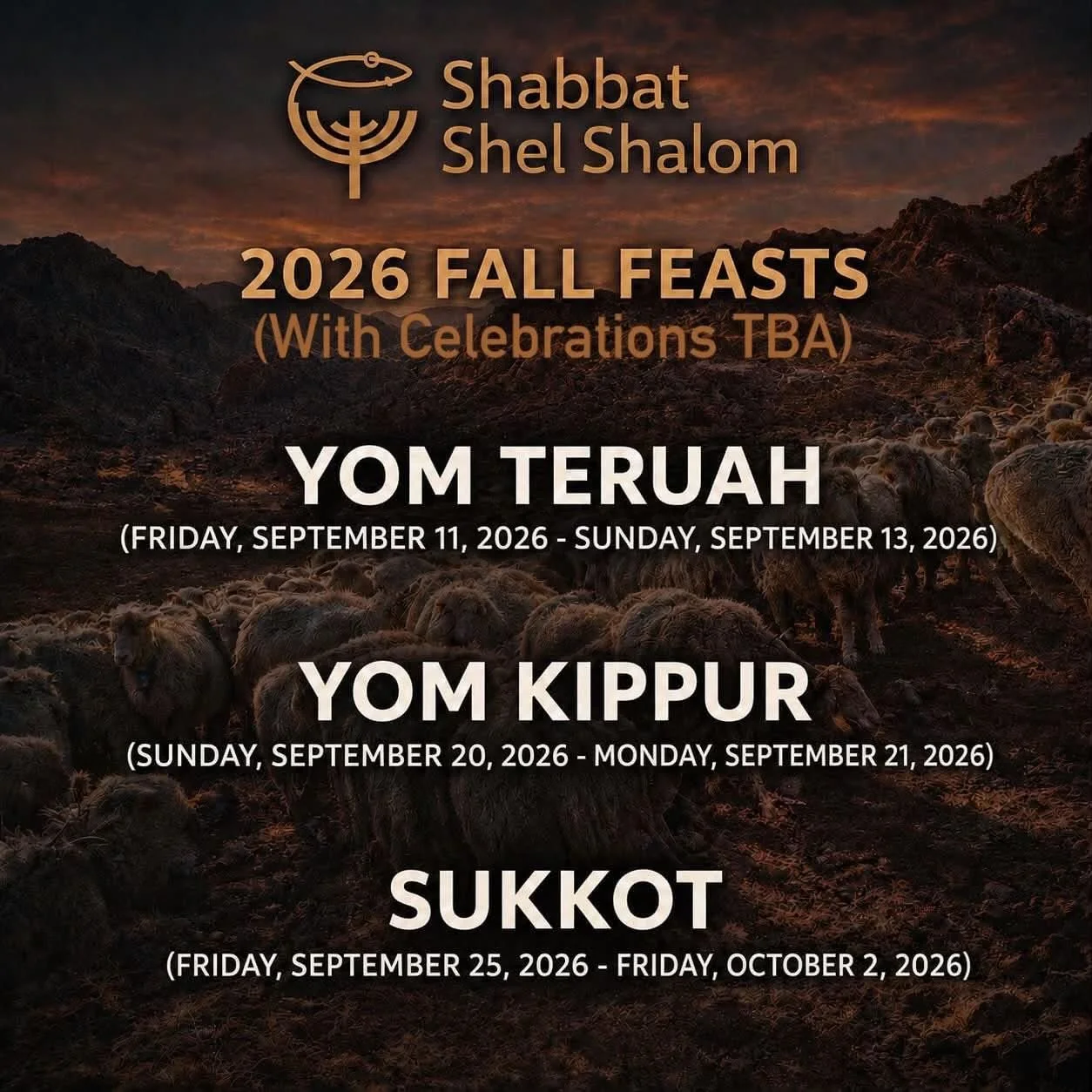
In 2026, we will commemorate the feasts with special celebrations on specific days and times to be announced during these feasts:
Yom Teruah: Friday, September 11 to Sunday, September 13
Yom Kippur: Sunday, September 20 to Monday, September 21
Sukkot: Friday, September 25 to Friday, October 2
These are more than dates on a calendar. They are sacred opportunities to gather as a community, examine our hearts, worship the Lord, and remember His goodness.
What Are the Biblical Fall Feast Days? The Fall Feast Days are appointed times described in the Torah, particularly in Leviticus 23. They occur during the seventh biblical month and include Yom Teruah, Yom Kippur, and Sukkot.
Each feast carries its own message:
Yom Teruah calls us to awaken and prepare.
Yom Kippur calls us to repentance and reconciliation.
Sukkot calls us to rejoice in God’s presence and provision.
For Messianic believers, these feasts are deeply connected to Yeshua. They help us understand what He has already accomplished and point us toward the fulfilment of God’s future promises.
Yom Teruah: The Day of the Shout Yom Teruah begins Friday, September 11, 2026, and continues through Sunday, September 13, 2026.
Yom Teruah is often called the Feast of Trumpets, although its Hebrew name more closely means the “Day of the Shout” or “Day of the Sounding.” The sound of the shofar is central to this appointed time. Throughout Scripture, the shofar announced significant moments. It gathered the people, warned of danger, proclaimed kingship, and called God’s people to attention.
The message of Yom Teruah is simple but urgent: Wake up. Listen.
Prepare your heart. The King is coming.
The shofar reminds us not to drift through life spiritually asleep. It calls us to return our attention to Adonai and to consider whether our lives reflect His character and purposes. For followers of Yeshua, the sound of the trumpet also points toward the promised return of Messiah. We do not know the day or hour, but we are called to remain faithful, watchful, and ready. Yom Teruah is therefore both joyful and serious. We rejoice because our King is faithful, while also allowing the sound of the shofar to awaken areas of our hearts that may have become distracted, discouraged, or distant.
Yom Kippur: The Day of Atonement Yom Kippur begins Sunday, September 20, 2026, and continues through Monday, September 21, 2026.
Yom Kippur is the most solemn appointed time of the biblical year. It is a day of repentance, prayer, humility, and reconciliation. In the days leading up to Yom Kippur, we are encouraged to examine our relationships with both God and one another.
Have we caused harm?
Are we holding bitterness?
Do we need to apologize, forgive, or make something right?
Repentance is not meant to leave us trapped in shame. Biblical repentance leads us back into fellowship with the Lord. It is an invitation to turn away from sin and return to the One who is merciful and gracious. As Messianic believers, Yom Kippur carries profound meaning because we recognize Yeshua as our perfect atoning sacrifice and faithful High Priest. Through His death and resurrection, Yeshua made the way for forgiveness, cleansing, and restored relationship with God. His sacrifice does not make repentance unnecessary. Instead, it gives us confidence to approach Adonai honestly, knowing that forgiveness has been made available through Messiah. Yom Kippur reminds us that sin is serious, grace is costly, and God’s mercy is greater than our failures. It is a time to become quiet before the Lord and pray:
“Search me, O God, and know my heart. Test me and know my anxious thoughts. See if there is any offensive way in me, and lead me in the everlasting way.”
Sukkot: The Feast of Tabernacles Sukkot begins Friday, September 25, 2026, and continues through Friday, October 2, 2026.
After the solemn reflection of Yom Kippur comes the joy of Sukkot. Sukkot, also known as the Feast of Tabernacles or Feast of Booths, remembers how Adonai sustained the children of Israel during their journey through the wilderness. Families traditionally build temporary shelters called sukkot as a reminder that earthly security is temporary, but God’s presence and faithfulness endure. Sukkot teaches us to trust the Lord as our provider. Our homes, possessions, plans, and circumstances can change quickly. Yet Adonai remains our shelter. He is the One who carries us through uncertain places and provides what we need along the journey. Sukkot is also called the Season of Our Joy. It is a time of worship, hospitality, thanksgiving, fellowship, and celebration. For Messianic believers, Sukkot beautifully points to Yeshua, who came and “tabernacled” among us. It also looks forward to the day when Messiah will reign and the nations will come to worship the King.
The message of Sukkot is filled with hope: God has dwelt with His people.
God is dwelling with His people. God will dwell with His people forever.
Why Should Believers Observe the Fall Feasts? We do not celebrate the biblical feasts to earn salvation or to prove our righteousness. Salvation is a gift of grace received through faith in Yeshua. We observe these appointed times because they teach us about God’s character, His covenant, His redemptive plan, and the work of Messiah.
The Fall Feasts give us a biblical rhythm for spiritual reflection: Yom Teruah awakens us. Yom Kippur humbles and restores us. Sukkot teaches us to rejoice and trust. Together, they take us on a journey from awakening to repentance, and from repentance into renewed joy.
Are the Fall Feasts Only for Jewish People? The Fall Feasts are rooted in the covenant relationship between Adonai and Israel, and their Jewish identity must be respected and honored. At the same time, followers of Yeshua from every nation can learn from and participate in these biblical appointed times in a respectful way. Gentile believers are not called to replace Israel or erase the Jewish foundations of the faith. We are invited to worship the God of Israel and appreciate the biblical context in which Yeshua lived, taught, died, and rose again. At Shabbat Shel Shalom, we welcome people from Jewish and non-Jewish backgrounds who desire to learn, worship, and grow together in Messiah.
Preparing Our Hearts for the 2026 Fall Feasts As we approach this sacred season, I encourage each of us to ask:
What is Adonai trying to awaken in me?
Is there anything I need to confess or make right?
Where do I need to trust God more fully?
What reasons has He given me to rejoice?
Let us enter the Fall Feasts with open hearts—not merely attending gatherings, but allowing the Lord to renew us. May the sound of the shofar awaken us. May the mercy of God lead us to repentance. May the joy of Sukkot remind us that Adonai is our shelter, our provider, and our everlasting hope.
Join Shabbat Shel Shalom for the 2026 Fall Feasts.
Shabbat Shel Shalom will be sharing upcoming services, celebrations, and community gatherings connected with Yom Teruah, Yom Kippur, and Sukkot. Visit our Events page regularly for updated information: https://shabbatshelshalom.com/events
We invite you to come, learn, worship, and celebrate with us as we honor the biblical Fall Feast Days and lift up the name of Yeshua our Messiah.
Shalom and blessings,
Rev Murray Archibald, Lead Pastor Shabbat Shel Shalom